Block paving is more durable and better-looking than plain concrete — but only when it is laid properly. The failures almost always show up in the same places, and nearly all of them can be prevented by respecting the correct sequence of work and good professional practice. This guide runs through the most common pitfalls we see across the province of Málaga.
1. Weak or uncompacted sub-base
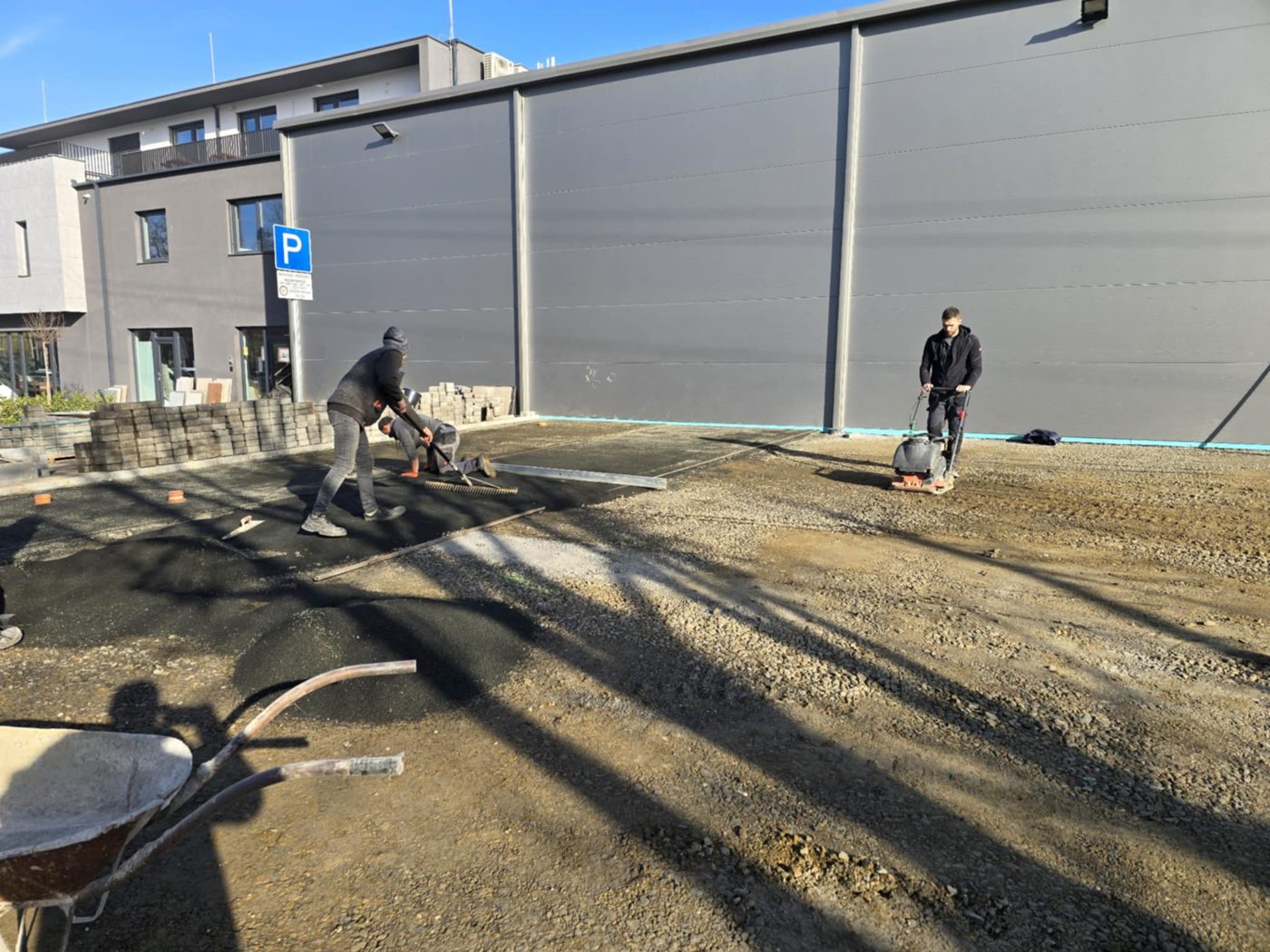
The most frequent and most serious mistake. A thin or poorly compacted base leads to sinking with absolute certainty — often after the first torrential autumn rains. The sub-base determines 90 per cent of the pavement's lifespan.
2. Wrong or missing falls
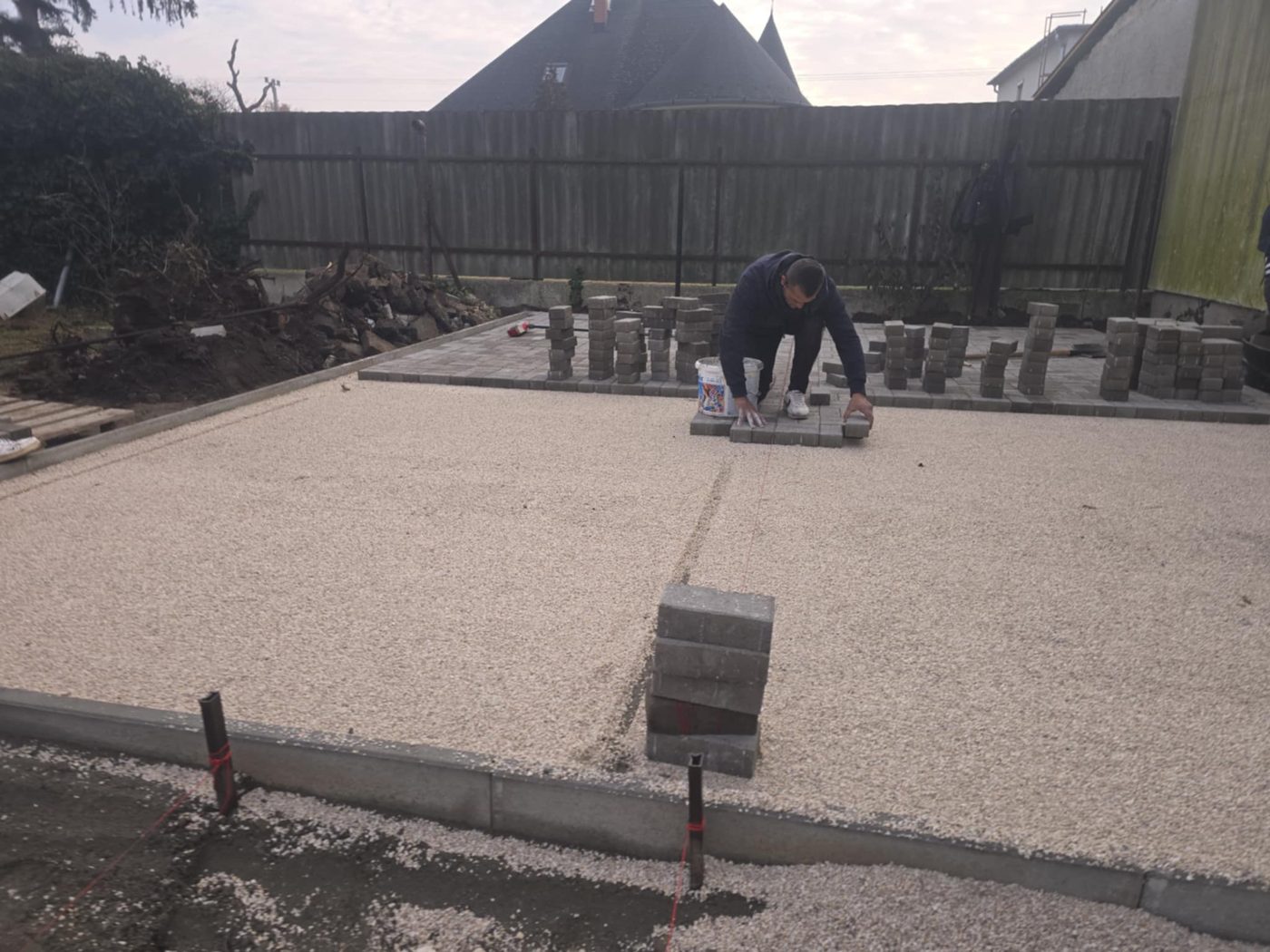
If water cannot drain away, you get standing puddles, a softened base, weed growth in the joints — and in the inland comarcas the occasional light frost makes the damage worse. The falls are set when the formation level is shaped; afterwards they can only be corrected by lifting the paving.
3. Missing or weak edge restraint
Without lateral restraint, the edge of the pavement spreads apart within a few years and the blocks work loose. Kerbs must be laid on a concrete bed with a concrete haunch — they are not decoration but a structural element.
4. Joints laid too tight
The 3–5 mm gap is needed for thermal expansion — very real under the Málaga sun — and for load distribution. Blocks butted hard against each other end up with chipped edges as they press together.
5. Wrong block thickness
A 4 cm pedestrian block under a car is a guaranteed break. Thickness must always be chosen to match the load (4/6/8 cm): foot traffic, cars, or heavy vehicles.
6. Working from a single pallet
Because of natural manufacturing colour variation, a professional lays blocks drawn from several pallets at once, mixing as he goes. Empty the pallets one by one and colour patches appear across the surface.
7. Haste and skipped compaction
The common root of most failures is hurry. Compacting layer by layer, waiting out curing times and careful jointing all take time — but they are indispensable steps.
The mark of professional work is not the appearance of perfection, but respect for the correct sequence of work.
How to spot a fault in time
Most paving defects develop gradually, and caught early they are far cheaper to fix. Warning signs: part of the surface sinks or becomes uneven; the joints wash out and grow weeds; the edge leans outwards or blocks work loose; puddles remain after rain. If you notice any of these, it pays to act before the fault spreads to a larger area.
The real cost of mistakes
Paving mistakes are particularly unforgiving because fixing them usually means opening up the surface. Reinstating a missing kerb is still relatively simple, but a surface that has sunk over an uncompacted base can only be put right with a complete rebuild — with the demolition and re-laying, it can cost even more than the original job. The cheapest mistake is therefore the one that never happens: prevention is good workmanship.
What to look for when choosing a contractor
Most faults are decided during construction, so the choice of contractor is crucial. Ask for an itemised written quote that shows the build-up of the pavement (crushed stone, cement-treated base, bedding thickness). Ask for references — ideally work you can go and see. Make sure the quote includes the edge restraint and the drainage. And insist on a guarantee — a serious contractor stands behind his work.
The "too good" price as a warning sign
If one offer is conspicuously cheaper than the rest, it almost always means a layer or a work phase has been dropped: thinner sub-base, cement-treated base omitted, kerb missing, or no compaction. Cheaper in the short term — but within a few years it sinks and needs repair. Comparing itemised quotes is how you filter out these seemingly attractive, actually risky offers.
Checklist during construction
- Has the excavation reached the designed depth?
- Is the crushed stone being laid and compacted in layers?
- Is there a proper fall leading away from the building?
- Are the kerbs set on a concrete bed with a concrete haunch?
- Are the blocks laid with 3–5 mm joints?
- Are blocks being mixed from several pallets?
- Is the job finished with plate compaction and jointing?
If all of these are in order, the pavement will have a long life. If you want to be certain, we deliver turnkey, guaranteed paving: +34 613 656 443.
Design mistakes
Not every fault is born on site — many are decided at the design stage. Common design mistakes include falls in the wrong direction (water running towards the house), missing drainage, an undersized surface (a driveway that is too narrow), or a pavement build-up not matched to the load. These are expensive to fix later, so careful design at the site survey is the best investment against mistakes.
Material mistakes
Cheap, low-quality blocks are tempting in the short term, but they soon fade, crumble and chip at the corners. A similar mistake is using blocks outdoors that do not meet UNE-EN 1338, or blocks that are too thin for heavy loads. Good-quality, certified blocks sized for the load always pay for themselves against poor-quality ones.
Maintenance mistakes
The finished surface can also deteriorate through poor maintenance. A pressure washer used too close washes out the joints; harsh cleaning chemicals attack the concrete; neglected joints grow weeds and empty out. Proper maintenance — gentle cleaning, topping up the jointing sand, checking the drainage before the autumn rains — gives the pavement a long life instead.
How to guarantee a fault-free result
The recipe for fault-free paving is simple but demands discipline: careful design, the right material, a build-up sized for the load, thorough compaction, correct falls, a stable edge restraint, and respect for the sequence of work. That requires an experienced contractor and an itemised, verifiable quote. Get those right and the pavement will serve for decades. For guaranteed workmanship, call us: +34 613 656 443.
The price of mistakes, in numbers
Rebuilding a surface that sank over an uncompacted base is practically a repeat of the entire job — with the demolition and re-laying it can even exceed the original cost (repairing sunken paving starts from €30/m² + VAT). Fixing an edge that spread for lack of a kerb means re-laying the whole perimeter. These numbers show why prevention — that is, good workmanship — is the cheapest solution.
Myth versus reality about block paving
Myth: "Block paving sinks eventually anyway." Reality: a well-built pavement stays level for decades; sinking is always a fault, never a natural process. Myth: "The kerb is just decorative." Reality: the kerb is a structural restraint element. Myth: "Any sand will do for the joints." Reality: the quality of the jointing sand affects both durability and weed resistance.
The prevention checklist
Good design (falls, drainage, sizing); quality, certified blocks matched to the load; a proper, compacted sub-base; a stable edge restraint; the right joint width and jointing material; respect for the sequence and curing times; and regular maintenance after handover. These few points rule out the vast majority of paving mistakes — and they are exactly what an experienced contractor guarantees.
Summary
- The most common mistake is a weak, uncompacted sub-base.
- Wrong falls cause standing water and damage to the base.
- Without an edge restraint, the pavement edge spreads apart.
- Joints laid too tight and the wrong thickness lead to breakage.
- Most faults stem from haste; prevention is good workmanship.
Key terms
Uncompacted base: a layer spread without mechanical compaction, which consolidates and sinks under load.
Thermal expansion: movement of the material with temperature, absorbed by a correctly sized joint.
Frequently asked questions
What is the most common paving mistake?
A weak or uncompacted sub-base, which leads to the surface sinking.
Why is the edge restraint important?
Without lateral restraint, the edge of the pavement spreads and the blocks work loose.
Why does paving end up with colour patches?
Working from a single pallet; a professional mixes blocks from several pallets to avoid tone differences.
Want block paving with no surprises in the province of Málaga? Call us on +34 613 656 443, write to oficina@adoquin.eu or get an estimate with our calculator. Free site survey and a no-obligation quote.
Planning a paving project?
Request a free site survey: we measure, advise, and within 1–2 working days you receive a detailed written quote.